Wireless Microphone Systems for Television Production
Lectrosonics wireless microphone and IFB systems are the standard on network and cable TV productions — reality TV, live sports, sitcoms, talk shows, and broadcast news. Digital Hybrid Wireless and full digital transmitters pair with DSQD and DSR4 receivers, while digital and analog IFB systems are used for talent and crew cueing, giving TV sound mixers and A2s the channel counts, pure sound, and reliability daily production schedules demand.
Which Lectrosonics Systems Do TV Sound Mixers and A2s Use?
TV audio teams build their rig around four categories: body-worn transmitters for cast and talent, camera-mount/slot receivers for ENG-style shooting, multichannel receivers for the sound cart or truck, and wireless IFB for cueing.

Lavalier Microphones
- L1 — sub-miniature lavalier powered by Sonaura™ MEMS technology, Lectrosonics’ newest transmitter for productions where size and weight are critical.
Wireless transmitters
- SSM — Miniature Digital Hybrid Wireless bodypack transmitter, tuning bandwidth up to 76.7 MHz and 3,072 selectable frequencies, built for concealment under costume.
- DSSM— Compact miniature beltpack transmitter widely used across multi-cast reality and documentary-style TV shoots.
- DBSM & DBSMD — DBSM and DBSMD digital transcorders were developed specifically for the needs of the film industry and offer time code jam sync capability with Encrypted with AES 256 bit CTR.


Camera-Mount and Slot Receivers
- DSR4 – four-channel digital slot receiver with full integration with Sound Devices 8-Series mixer/recorders.
- DSR – two-channel digital slot receiver engineered for mobile sound production, sports video, and reality TV.
- SRc — dual-channel slot-mount receiver docking directly to camera-top wireless slots, standard for on-camera ENG and documentary-style film work.


Multichannel Sound Cart Receivers
- DSQD — 4-channel digital receiver with Dante networking, backward compatible with Digital Hybrid Wireless transmitters (SM, HM, LM, MM, UM400 series and more).
- Venue 2 — modular, rack-mount receiver array for mixers running 12, 16, or more wireless channels on a feature film sound cart, with remote monitoring and antenna distribution.


Wireless IFB and Talent Cueing
- Duet — Including M2T transmitter and M2Ra receiver. M2T offers a dual-channel bodypack option for boom-and-lav or two-source setups on a single transmitter. M2Ra receiver pack for the Duet Digital Wireless system offers superior RF and audio performance including true stereo imaging.
- IFBR1B/IFBlue — Bodypack IFB receivers for talent earpieces, letting directors and producers cue hosts and contestants live.
- IFBT2.0/IFBT4 — IFB transmitter base stations for distributing cues to multiple talent channels at once.


What Makes a Wireless Mic System Right for Television Production?
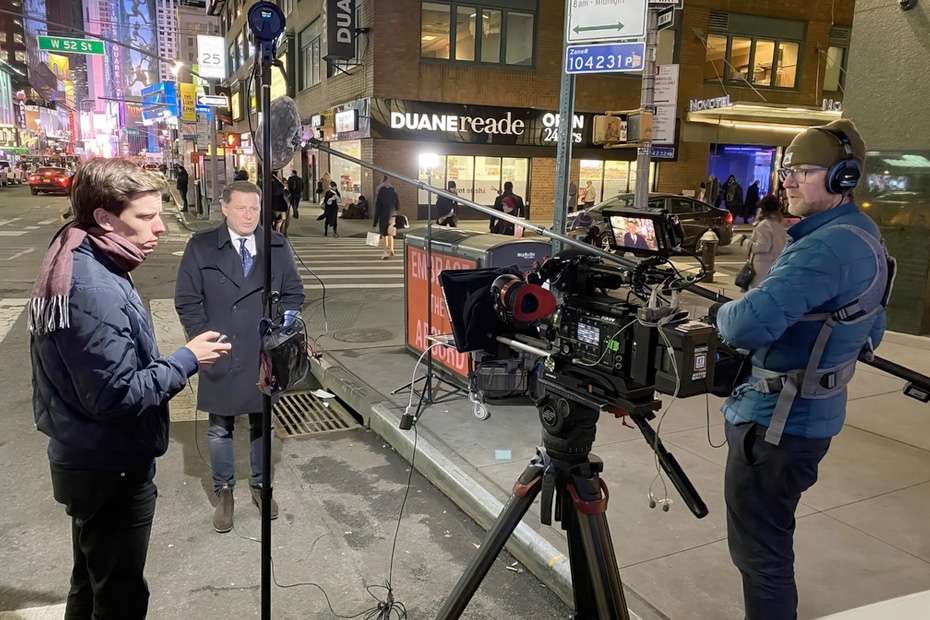
TV production runs on a different clock than film. A sitcom shoots a full episode in a day, a reality show mics 8–15 cast members at once with no retakes, and a live sports broadcast can’t stop for a dropout. That means a TV-ready wireless system needs high channel density, fast setup and battery-swap workflows, rock-solid RF performance in crowded venues and arenas, and built-in IFB so directors and producers can cue talent in real time. It also has to survive daily wear — TV audio departments run the same gear five days a week, week after week, for an entire season.
This is the bar Lectrosonics systems are built to clear on unscripted, scripted, live, and sports broadcast sets alike.

Why Do TV Sound Mixers Trust Lectrosonics on Set?
Lectrosonics has supplied wireless systems to film, broadcast, and theatre productions since 1971 and holds an Academy Award of Merit (Sci-Tech) for Digital Hybrid Wireless technology. On television specifically, that track record includes HBO’s Tremé, Spike TV’s Ink Master, and studio buildouts like Turner Studios’ Techwood campus, which standardized on Lectrosonics Venue receivers, SSM transmitters, and IFB systems across its production facilities. Reality TV productions in particular lean on Lectrosonics gear from rental houses because it holds up to daily, multi-cast, multi-week shoot schedules without the RF issues that plague lower-end systems.

Digital Hybrid Wireless vs. Fully Digital — Which Should a Production Choose?
As with film, TV productions tend to standardize on one wireless architecture across the whole package. Digital Hybrid Wireless® pairs analog RF transmission with digital audio processing, giving mixers the widest tuning bandwidth and the most resilient performance in RF-dense environments like stadiums, live event venues, and studio lots with dozens of other RF devices running at once — a common reality-TV and live-sports scenario. Fully digital systems offer higher fidelity and increased tuning bandwidth. And, in models like the DSQD and Duet digital line, direct networked integration into a broadcast audio workflow. The right choice depends on the show’s RF environment, cast size, and how audio needs to route into the truck or post pipeline.
Frequently Asked Questions
What is the best wireless microphone system for television production?
For professional TV production, Lectrosonics Digital Hybrid Wireless® and fully digital systems are the industry standard, used across reality TV, sitcoms, live sports, and broadcast news for their RF reliability, scalable channel count, and integrated IFB options.
What wireless mics do reality TV shows use?
Reality TV productions typically mic every cast member simultaneously, so they rely on multichannel receiver systems like Lectrosonics Venue 2 paired with compact transmitters (SSM, MM400) — often through rental houses that standardize on Lectrosonics for its reliability across long, multi-week shoot schedules.
How do TV productions cue talent and hosts during a live broadcast?
Directors and producers use wireless IFB (interruptible fold back) systems — such as Lectrosonics IFBR1B bodypack receivers paired with an IFBT2.0 or IFBT4 base station — to send live cues to a host’s or contestant’s earpiece during taping or broadcast.
How many wireless mic channels does a TV sound cart need?
It depends on cast size: single-host formats may need just a few channels, while reality TV and multi-talent live broadcasts often run 12–16+ simultaneous channels through a modular receiver system like Lectrosonics Venue 2.
What's the difference between wireless systems for film and television production?
Film and TV use largely the same professional-grade wireless technology, but TV production — especially reality TV, live sports, and daily sitcom shoots — places heavier emphasis on channel density, fast daily setup, and built-in IFB for live talent cueing, since there’s little room for retakes.


