
- Six-channel modular configuration
- Ratio, Antenna Phase or Frequency diversity reception
- 256 synthesized UHF frequencies per receiver module
- DSP-based pilot tone squelch control
- DSP emulation modes for compatibility with analog wireless systems in addition to the Digital Hybrid mode
- SmartNR™ noise reduction modes
- LecNet2 software interface included
- LCD interface for setup and monitoring
- USB and RS-232 computer interface
The Venue Receiver is a modular solution that effectively deals with a congested RF spectrum with a variety of options that allows a system configuration to be idealized for a particular installation or application.
The receiver is comprised of several components:
- The master rack mount host assembly
- Up to six receiver modules
- Built-in antenna multicoupler with loop-thru output
- LecNet2 software for setup and control
Flexibility is the core concept of the design. The receiver modules can be operated separately, each with switched diversity reception for a total of six audio channels, or operated in pairs for more robust diversity reception with one audio channel per module pair. Combinations can also be used for special applications where some modules operate independently and others are paired.
The receiver modules are easy to change with no tools required. The wideband multicoupler allows the use of any frequency module in any position, except when modules are paired, they must be in adjacent positions as marked on the panel.

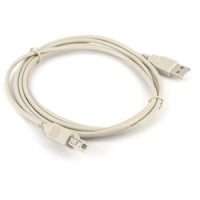


Firmware updates can be installed into a LecNet2 product using the Control Panel software (running on your PC or laptop computer) and a USB cable. The latest firmware for each product can be downloaded using the links below. These files are zip archives, and must be unzipped before use.
Be sure that you know which Venue Receiver model you have before attempting to update firmware, so that you select the correct download!
The “Narrowband” Venue Receiver is the original model covering 2 frequency “blocks”. The recently introduced “Wideband” models cover blocks 21 – 29 (VRMWB) or blocks 470 – 26 (VRMWBL). The “944 MHz” model (VRM944) covers only the special part 74 frequency band starting at, well, 944 MHz. Contact the factory for assistance if you have any doubt about the identity of a Venue Receiver.
| Title | File Size | File Type | Date | Filename | Link |
|---|---|---|---|---|---|
| Firmware: Venue – 944 MHz | 86 KB | zip | May 31, 2024 | vrm944-v1_2.zip | |
| Firmware: Venue – Narrowband | 99 KB | zip | May 31, 2024 | vr-v5_5.zip | |
| Firmware: Venue – Wideband | 98 KB | zip | May 31, 2024 | vrwb-v6_0.zip | |
| Firmware: VR/E01 Firmware Updates | 100 KB | zip | May 31, 2024 | vr_e01-v5_5.zip |
VRWB v6.0 – 11 December 2018
Substituted NU Hybrid (NUH) and NU Hybrid with talkback (NTB) for 100 Series and Mode 6 compatibility modes, respectively.
Removed REFUMAUS mode.
Fixed rounding error in “mhz” serial update command.
VRWB v5.6 – 07 July 2015
Fixed test tone signal routing bug: If test tones were used in conjunction with ratio diversity, tones could sometimes appear at the requested jack and one that wasn’t the requested channel’s diversity companion.
Improved debouncing of power switch, so power will not come back on due to switch bounce when the button is released at power-off.
VRWB v5.5 – 21 March 2013
Added a new analog compatibility mode: “Mode 7”. Also enhanced squelch system to ignore supersonic emissions from transmitters (especially the native “Mode 7” analog transmitter).
VRWB v5.3 – 31 July 2012
Modified PLL logic for improved module detection with newer Rev. B modules.
VRWB v5.2 – 22 May 2012
Modified GUI interface to expose Talk Back activity and control (for use with VRpanel version 3.1 or later). TX battery status has been adjusted to increase accuracy with lithium style batteries. Start-up routine has been modified to prevent the need for “re-detection” after power up with newer style receiver modules (Rev. B).
VRWB v5.1 – 22 February 2012
Fixed a bug that prevented Ratio Diversity from being selected.
VRWB v5.0 – 09 January 2012
Modified PLL compatibility for use with new PLL IC. Added Talk Back functionality for use with new HH transmitter. Fixed a minor timing bug that resulted in occasional jumpy rotary control. Version 5.0 (or later) is necessary for newer modules built with the PLL IC, and is fully backward compatible with older style modules.
VRWB v2.3 – 19 January 2010
Fixed a bug in version 2.2 that limited the opportunity for detection of modules with laggy (but not broken) PLL’s. On occasion, instead of being detected, they would show as an unknown block, depicted by a “?” on the main screen.
VRWB v2.2 – 13 December 2010
Added logic to allow the future use of different PLL IC’s in modules. Added compatibility for a new eeprom IC. The logic works with both new and old IC’s alike. Lastly, the module detection algorithm was modified to acknowledge a module, even if the detection signature was unknown. The user is then able to manually assign a block to that module.
VRWB v2.1 – February 10 2010
Removed an erroneous pilot tone indicator in mode 3 receiver detail screen. Improved diversity and noise squelch systems for substantially quieter operation under moderate to weak RF conditions.
VRWB v2.0 – 03 September 2009
Fixed a register initialization error that could theoretically cause the DSP to not boot during system start up. No evidence has surfaced that this bug has ever manifest.
VRWB v1.9 – 18 August 2009
CHANGES
Scaling for european units only applied to the low band signal in relevant modes (hybrid & exp200), increasing apparent RF sensitivity.
- Bug fixes and further sonic refinement to mode 3.
- Fixed noise floor in combined diversity modes.
- Limited occurrence of “Check Frequency” message.
- Added compatibility for new analog headphones switch.
(This firmware works with both old and new hardware versions, and knows which switch is installed by the unit’s serial number.)
VRWB v1.8 – 27 May 2009
Module detection algorithm modified to avoid slight tick in audio. Channel indicator in custom mode now uses hexadecimal rather than a decimal channel number. Applied bug fixes and sonic refinement to mode 3.
VRWB v1.7 – 14 July 2008
Cleaned up displays when special, three-digit frequency blocks are used.
VRWB v1.6 – 13 June 2008
Fixed ratio diversity display bug. SmartTune(tm) will no longer select frequencies in the U.S. astronomy band (608-614 MHz). Corrected warning threshold voltage for AA lithium batteries. Fixed bug involving low battery status in frequency diversity mode. Battery timer now correctly rolls over from 9hrs:59min, to 0:00. Added new extended blocks for export models. Block 470 receivers now correctly only offer tuning groups B and D.
VRWB v1.5 – 06 March 2008
Added support for low band (block 470-block 26).
VRWB v1.4 – 08 January 2008
First production release.
VR v5.5 – 17 April 2013
Added a new analog compatibility mode: “Mode 7”. Also enhanced squelch system to ignore supersonic emissions from transmitters (especially the native “Mode 7” analog transmitter).
VR v5.2 – 31 July 2012
Modified PLL logic for improved module detection with newer Rev. B modules.
VR v5.1 – 22 May 2012
- Modified PLL compatibility for use with newer Rev. B modules.
- Added Talk Back functionality for use with compatible transmitters.
- Modified GUI interface to expose Talk Back activity and control (for use with VRpanel version 3.1 or later).
- Modified start-up routine for reliable acquisition of newer modules.
VR v4.3 – 12 August 2008
- Modified some filter coefficients in the DSP to help with quick audio transients (snaps & claps).
- Applied bug fixes and sonic refinements to mode 3.
- Limited occurrence of ‘Check Freq’ message.
- Battery timer now rolls over at 10 hours.
- Fixed noise floor in combined diversity modes.
VR v4.2 17 June 2008
Corrected minor ratio diversity display bugs. SmartTune(tm) will no longer select frequencies in the U.S. astronomy band (608-614 MHz). Corrected warning threshold voltage for AA lithium batteries. Fixed bug involving low battery status in frequency diversity mode.
VR v4.0 – 18 January 2008
Added SmartTune(tm) feature. Also improved response to fast keypresses.
VR v3.9 – 07 March 2007
Corrected an overflow error that caused excessive distortion in 200 Series mode when the transmitter was in extreme limiting. Note that this is a separate fix from the one in v3.7.
VR v3.8 – 28 August 2006
Adjusted RF meter response for more accurate readings when used with Rev. B and newer main boards.
VR v3.7 – 12 June 2006
Corrected a firmware bug that caused excessive distortion in 200 Series mode when the transmitter was in limiting.
VR v3.5 – 06 September 2005
Fixed obscure bug where setting a VR receiver to Factory Defaults didn’t fully restore the default diversity modes until the next power cycle.
VR v3.4 – 19 July 2005
Dynamic noise reduction audio filter now uses supersonic noise rather than RF signal strength indication to deliver improved audio performance.
VR v3.3 – 01 July 2005
Added “mode 6”.
VR v3.2 – 09 May 2005
Beginning with this version, the 3.x branch is compatible with ALL VR units. Use the latest 3.x firmware to replace 2.x firmware. v3.2 fixes a bug causing diversity mode changes made via the serial port to take effect only after the next power cycle. Tx battery status reporting was added to the Rx info screen.
VR v3.1 – 10 January 2005
Firmware now issues warning messages when strong off-frequency signals are received. Increased limiter overhead in 200 Series compatibility mode. Fixed diversity and squelch systems for quieter operation.
VR v2.1 – 06 August 2004
First production release.
VR/E01 v5.5 – 13 February 2013
Added a new analog compatibility mode: “Mode 7”. Also enhanced squelch system to ignore supersonic emissions from transmitters (especially the native “Mode 7” analog transmitter).
VR/E01 v5.4 – 18 October 2012
Adjusted the pilot tone capture and release thresholds for more consistent talk-back functionality.
VR/E01 v5.3 – 01 August 2012
Modified PLL logic for improved module detection with newer Rev. B modules.
VR/E01 v5.2 – 29 June 2012
Modified GUI interface to expose Talk Back activity and control (for use with VRpanel version 3.1 or later). TX battery status has been adjusted to increase accuracy with lithium style batteries. Start-up routine has been modified to prevent the need for “re-detection” after power up with newer style receiver modules (Rev. B).
VR/E01 v5.1 – 22 February 2012
Fixed a bug that prevented Ratio Diversity from being selected.
VR/E01 v5.0 – 25 January 2012
Modified PLL compatibility for use with new PLL IC. Added Talk Back functionality for use with new HH transmitter. Fixed a minor timing bug that resulted in occasional jumpy rotary control. Version 5.0 (or later) is necessary for newer modules built with the PLL IC, and is fully backward compatible with older style modules.
VR/E01 v1.6 – 19 January 2011
Fixed a bug in version 1.5 that limited the opportunity for detection of modules with laggy (but not broken) PLL’s. On occasion, instead of being detected, they would show as an unknown block, depicted by a “?” on the main screen.
VR/E01 v1.5 – 13 December 2010
Added logic to allow the future use of different PLL IC’s in modules. Added compatibility for a new eeprom IC. The logic works with both new and old IC’s alike. Lastly, the module detection algorithm was modified to acknowledge a module, even if the detection signature was unknown. The user is then able to manually assign a block to that module.
VR/E01 v1.4 – 22 January 2010
Added 110, 300, ‘mode 3’, and ‘mode 6’ series compatibility modes. Improved diversity and noise squelch systems for substantially quieter operation under moderate to weak RF conditions.
VR/E01 v1.3 – 03 September 2009
Fixed a register initialization error that could theoretically cause the DSP to not boot during system start up. No evidence has surfaced that this bug has ever manifest.
VR/E01 v1.2 – 18 August 2009
CHANGES
- Scaling for european units only applied to the low band signal in relevant modes (hybrid & exp200), increasing apparent RF sensitivity.
- Bug fixes and further sonic refinement to mode 3.
- Fixed noise floor in combined diversity modes.
- Limited occurrence of “Check Frequency” message.
- Added compatibility for new analog headphones switch.
(This firmware works with both old and new hardware versions, and knows which switch is installed by the unit’s serial number.)
VR/E01 v1.1 – 04 June 2009
Module detection algorithm modified to avoid slight tick in audio. Channel indicator in custom mode now uses hexadecimal rather than a decimal channel number. Applied bug fixes and sonic refinement to mode 3.
VR/E01 v1.0 – 27 May 2009
First production release.


